November 13, 2026 / Themes/Genre Primer

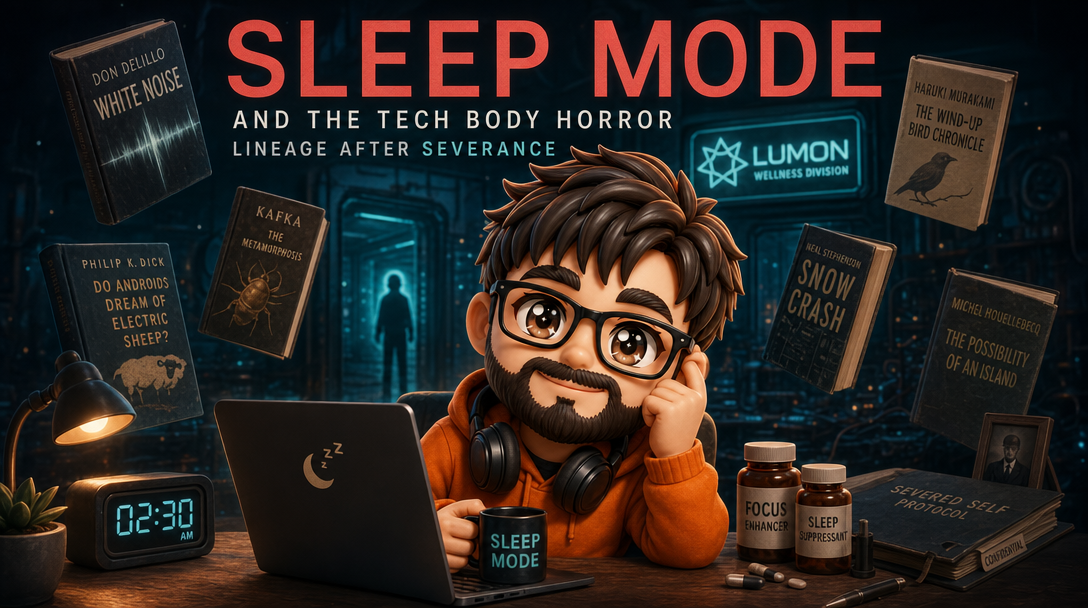
Sleep Mode And The Tech Body Horror Lineage After Severance

A reading guide to the tech body horror lineage that produced both Severance and Sleep Mode, traced through Get Out, Mexican Gothic, Bunny, The Need, and the gig-economy descendant on the page.

Tech Body HorrorBooks Like SeveranceSleep Mode NovelGig Economy HorrorSocial Horror BooksWhat To Read After Severance
Sleep Mode And The Tech Body Horror Lineage After Severance
If you came to this post you are probably between Severance seasons and have already read the Books Like Severance comp post. You found Sleep Mode there. You are now back for the deeper dive. You want the lineage. You want the line that runs from Get Out through Severance into Sleep Mode and through the next few writers in the lane. You want to understand why this shape of horror is having a moment. This post is that walk. The lineage in the order I trace it: Get Out by Jordan Peele (2017, the contemporary Year Zero of social-economic body horror), Mexican Gothic by Silvia Moreno-Garcia (the gothic mode applied to the same shape), Bunny by Mona Awad (the campus-novel mode applied to the same shape), The Need by Helen Phillips (the domestic-life mode applied to the same shape), Severance the Apple TV show (the corporate-middle-management mode applied to the same shape), and Sleep Mode by Kevin Gabeci (the gig-economy mode applied to the same shape). The line is consistent. The mode varies. Start anywhere on the line. The post will walk you through how each entry contributes to the lineage and where Sleep Mode sits at its current end. Tech body horror as a contemporary subgenre is doing one specific thing across all its variants. It is treating the body as a thing other people are using. The mechanism varies. The economic shape under it does not. Get Out makes the mechanism literal. Wealthy white families are buying Black bodies through a process the bodies' original owners do not consent to, framed as something else (a cult, a romance, a family weekend). The horror is the gap between the surface and the structure. The body is being used. The person is being erased. Mexican Gothic moves the same shape into the gothic mode. A young woman travels to a remote estate in the Mexican countryside to check on her cousin and discovers that the family inhabiting the estate has been using its servants and its captive women as material for a multi-generational fungal experiment. Same shape, gothic mode. Bunny moves the shape into the campus novel. An MFA student is invited into the inner circle of a clique of wealthy young women who are doing something with the bodies of men in the woods that the protagonist is initially flattered to be allowed to learn. Same shape, campus mode. The Need moves the shape into domestic life. A mother of two believes there is an intruder in her house. The intruder turns out to be something that resembles her, in a way that requires the protagonist to confront what she has been giving away of herself, body and presence and memory, across the years of caring for her children. Same shape, domestic mode. Severance moves the shape into the corporate middle. A company offers an elective procedure that splits the worker's consciousness so that the work-self and the home-self never meet. The labor question is the engine. The horror is the consent that compounds across selves you never meet. Same shape, corporate mode. Sleep Mode moves the shape into the gig economy. The body becomes a unit of inventory the platform rents out by the night, with the worker paid to sleep through the rental. The labor question is again the engine. The horror is the slow body deterioration that the worker is paid not to ask too many questions about. Same shape, gig-economy mode. The line is the consistent treatment of the body as economic asset, with each entry adapting the shape to a different mode that was already legible to its readers. The reason the lineage is having a moment is that the contemporary economy is itself doing what the lineage is dramatizing. The gig economy genuinely treats workers as units of inventory. Big tech genuinely splits home-self from work-self in ways that compound across years. Healthcare debt genuinely renders the body a thing other people own a piece of. The fiction is naming what the economy is doing, in a register that the social-realist novel is currently underprepared for. The gig-economy descendant. The novel I am most equipped to walk you through, and the one this post exists to recommend specifically. The premise. Maya Cruz is a county social services case worker in Memphis. Single mother. Six-year-old daughter named Luna. Forty-seven dollars in her checking account. Three months behind on rent. A landlord's final-warning letter on the kitchen table. She rides the city bus home from after-school pickup and a Sleep Mode ad plays on the overhead screen. Lavender and navy. Crescent moon cradling a dollar sign. Sleep well. Wake up paid. A woman across the aisle has a small bump behind her left ear. Maya notices. That night she opens the Sleep Mode app on her phone. She does not remember downloading it. She has actually downloaded it two weeks ago and has opened it four times without signing up. She scrolls onboarding. Twelve hundred to fifteen hundred dollars a month. You were going to sleep anyway. She does the math one more time. Fourteen hundred a month changes everything. Rent. Electric. Shoes for Luna. Food that is not rationed. She schedules her screening for Thursday. The app responds with a cheerful notification. She closes her eyes and thinks of the woman on the bus and wonders where the woman's body is right now. The mechanism. Sleep Mode Inc is a Texas-based startup with a four-hundred-million-dollar valuation and forty thousand active users. The company implants users with a device called a SomNode, the small bump behind the ear, that the company markets as managing the user's sleep architecture. What the company is actually doing with the user's body during the sleep hours is the slowly-revealed center of the novel. The labor economics under it is the engine. The hourly wage is generous by gig-economy standards. The cost is hidden in the body changes the user pays not to think too hard about. The investigation. The novel runs dual POV, alternating chapters. Maya is the user. Nate Alderman is a journalist who got a tip and is trying to verify what Sleep Mode is actually doing to its workers. The two threads run in parallel for most of the book and converge in the final act. Nate's investigation is procedural. Maya's experience is interior. Both threads are organized around the same labor question. Who is using the body, and on what consent terms. What it gives a reader who came in through Severance. The labor question made explicit. Severance is structurally cagy about the corporation's actual product. Sleep Mode tells you the product on page one. The thing you are renting out is your body. The horror is in what the rental does to it. The other Severance beat that Sleep Mode honors is the consent-that-compounds beat. Every night Maya signs on, the consent renews, and every renewal makes the next renewal harder to refuse, because the financial situation that drove her to sign on the first time is now twelve hundred dollars further along the path that sign-on enabled.
If your favorite Severance beat is the moment a worker realizes the structure she is inside is the thing that is using her, this novel is built around that beat.
Sleep Mode is on Amazon Kindle and Kindle Unlimited. The novel runs about fifty thousand words across twenty-eight chapters, propulsive enough to read in two sittings and patient enough to reward a slower pace. The Memphis setting is specific and lived-in. Luna is a real character. Maya's voice carries the book. If you want to walk the full lineage rather than just dropping into Sleep Mode, the recommended order is:
  1. Get Out (the film, 2017). One hundred and four minutes. The Year Zero text.
  2. Mexican Gothic by Silvia Moreno-Garcia. The gothic-mode adaptation.
  3. The Need by Helen Phillips. The domestic-mode adaptation.
  4. Bunny by Mona Awad. The campus-mode adaptation.
  5. Severance (Apple TV, two seasons). The corporate-mode adaptation.
  6. Sleep Mode by Kevin Gabeci. The gig-economy-mode adaptation.
You can take the line in any order. The films and the show do not require the novels. The novels do not require the films and the show. The compounding effect of reading the lineage in sequence is real, though, and the recurring shape across all six entries makes the final entry land harder than it would alone. Both works are organized around a labor question. Both treat the body as the site of the question. Both withhold the company's actual purpose for as long as the structure allows. Severance compresses the timeline through the procedure. The split between Mark S. and Mark Scout is total. Sleep Mode does not split the consciousness. The worker remembers the rental. The worker chose it. The choice is the engine. Severance is most interested in the question of who counts as a person across the split. Sleep Mode is most interested in the question of who owns the body across the rental. The questions are cousins. They do not collapse into each other. Severance lives in the corporate middle, with the mythical Lumon Industries and its quasi-religious internal culture. Sleep Mode lives in the gig economy, with a four-hundred-million-dollar startup and its very-recognizable A-round and B-round investor mix and its very-recognizable Memphis ops campus on Democrat Road near the airport. Severance is structurally fantastical in the procedure that enables the split. Sleep Mode keeps the technology grounded. The SomNode is implausible but not magical. The body changes the rental causes are exaggerations of plausible biological processes. The novel is closer to social realism than to speculative fiction. The reader who likes both is the reader who likes the labor question taken seriously and the body treated as the site where the question lands. The lineage is large enough to hold both modes. If you have just finished Severance Season Two and want one novel to read next, Sleep Mode is the cleanest current match. If you want the broader Severance comp list, the Books Like Severance comp post is the right door. If you want the body-horror-of-the-gig-economy treatment as a themed primer rather than as a comp, the Body Horror Of The Gig Economy post is the deeper dive on Sleep Mode specifically. If you want the parallel-thriller in the catalog, the Recall vs Dark Matter post covers the identity-thriller variant. For the broader catalog of near-future tech fiction, the Near Future Tech Thrillers Reading List is the keystone roundup. Whichever way you go, I hope the lineage sticks. The tech body horror line that runs from Get Out through Severance into Sleep Mode is one of the most coherent lineages in current speculative fiction, and once you can see the line, the next entry on it is rarely far away. The Sleep Mode page lives at books.kevingabeci.com/sleep-mode.
I'm Kevin Gabeci. Software engineer by day, writer the rest of the time. Thirteen novels, a story collection, and a comic on Amazon Kindle. Long-time writer on Medium. I spend a strange amount of time thinking about the body as economic asset and the slow ways the gig economy rewrites what consent means. The full catalog lives at books.kevingabeci.com.
Frequently Asked Questions

What is the tech body horror lineage that produced Severance and Sleep Mode?

A contemporary lineage that runs roughly from Get Out (2017) as Year Zero, through Mexican Gothic, Bunny, The Need, and the body-as-economic-asset stories on the indie shelf, into Severance the show and Sleep Mode the novel as the gig-economy descendants. The line is the consistent treatment of the body as a thing other people are using, with the worker treated as a unit of inventory rather than as a person.

Where can I start with Sleep Mode?

Sleep Mode is on Amazon Kindle and Kindle Unlimited. The novel follows Maya Cruz, a Memphis case worker and single mother whose financial situation pushes her to sign up for a service that pays her to sleep while a startup uses her body for a different purpose. It runs about fifty thousand words across twenty-eight chapters. Read in two sittings, or one if you have a free evening.

How is this different from the Books Like Severance comp post?

The Books Like Severance comp post is the broader recommendation list for Severance fans looking for novels in the same shape. This post is the deeper dive into the specific lineage that produced both Severance and Sleep Mode. Same neighborhood, different cut. The comp post is the front door. This post is the long walk through the back garden.

Is Sleep Mode actually horror or is it a thriller?

Both, in the specific register that the body horror lineage occupies. The horror is economic before it is supernatural. There are no ghosts. There is a startup, a labor economics, and a slow body-deterioration that the worker is paid not to ask too many questions about. The thriller propulsion comes from the parallel investigation thread following Nate Alderman, who is trying to expose the company while Maya is trying to survive being one of its workers.

What is the SomNode in Sleep Mode?

The SomNode is the device behind the ear that the company implants in users to manage what they call sleep architecture. It is the visible mark of the Sleep Mode user, a small bump that other users can recognize across a city bus. The novel uses it the way Severance uses the chip, as the structural surface of a deeper consent question that the worker did not realize she was signing on the day she enrolled.

Should I read Sleep Mode before or after rewatching Severance?

Either. The novel does not require Severance knowledge but rewards it. Reading Sleep Mode after Severance Season Two is the most directly satisfying entry, because the gig-economy lens that Sleep Mode applies clarifies the labor question that Severance treats more obliquely. Reading Sleep Mode before a Severance rewatch makes the rewatch sharper. Either order works.

Sleep Mode After Severance, Tech Body Horror Reading