July 21, 2026Series Primer
The World of Strohr: A Primer on the Dark Fantasy Setting of Investigating the Wicked
A spoiler light primer on Strohr, the dark fantasy world of Investigating the Wicked, where evil is real, wears human faces, and makes a perfect stage for a mystery.Investigating the Wicked
Dark Fantasy
Worldbuilding
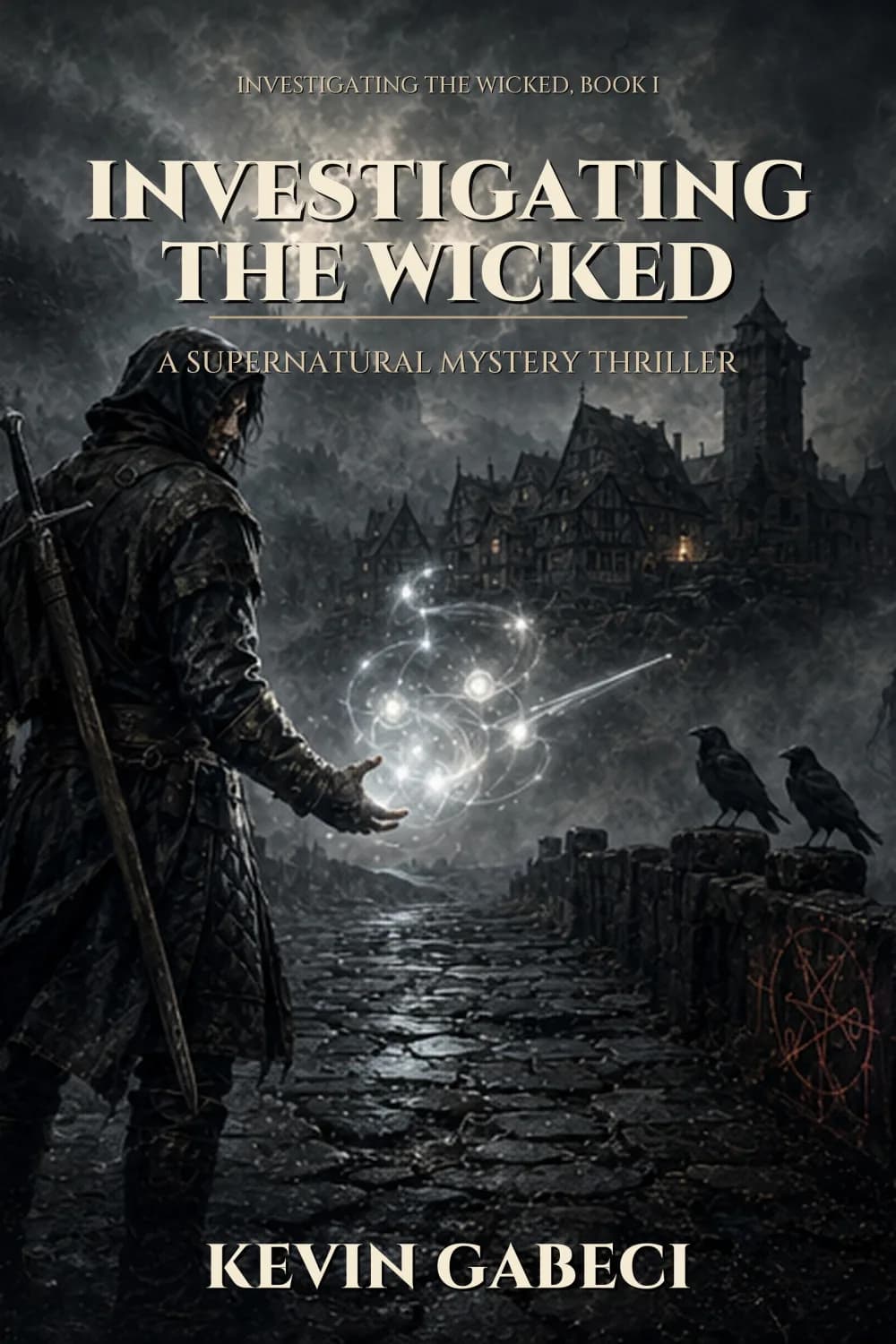
Strohr is an old world, worn at the edges. There are cities and trade roads, fishing towns and frozen ports, noble houses with long memories and longer debts. On the surface it reads like the kind of grounded, lived in fantasy you already know how to walk through. No neon, no chosen one prophecy stitched across the sky. Just a world of people getting on with their lives.
The difference sits underneath all of that. In Strohr, the wicked is not an idea. It is a presence. Something can be born wrong, or made wrong, or quietly turned, and once it has turned it learns to pass. It learns to smile at the right moments and say the right things and live next door to you for years. The horror of the world is not that monsters exist. It is that they have learned to look exactly like everyone else.
Picture a village where the people have stopped speaking, and the silence itself seems to be hiding something. Picture a city that looks ordinary in daylight and hides things in the dark beneath its streets. Picture a fortress where cruelty has been written into law, where the rules exist to protect the worst people in the room.
These are the kinds of places the series moves through, and in every one of them the central question is the same. Who here is wearing a face. The wicked in Strohr is rarely a snarling beast in a cave, though those exist too. More often it is the trusted neighbor, the smiling official, the friend who has been a friend for years. Evil that wears a human face is so much worse than evil that announces itself, because you cannot raise a sword at a smile until you are certain. And certainty, in Strohr, is the most expensive thing there is.
Here is where the world and the genre lock together. A mystery needs a hidden truth and a reason that truth is hard to see. Strohr supplies both by its very nature. If evil can wear any face, then every case becomes a question of identity before it can become a fight. The hero cannot simply find the monster and end it. He has to figure out which person in the room is the monster, and prove it, and live with being wrong if he guesses.
That turns the books into detective stories with teeth. The investigation matters as much as the swordwork, often more. A bad reading of a situation does not just cost a clue, it costs a life, sometimes the wrong one. The world forces patience, doubt, and the slow accumulation of evidence onto a hero who would very much prefer to act first, and it only works because the world is built the way it is.
You see Strohr through Kavel, one of the last Investigators of the Wicked, a member of a dying order built to hunt exactly the kind of evil this world produces. He travels alone, raised on a single hard rule that the wicked is the wicked, into towns that have mostly forgotten his order ever existed. He is good at the work and sure of himself, which is precisely the kind of certainty a place like Strohr exists to test.
He is the perfect guide because he believes he already understands the world. Walking beside him, case by case, is how you come to understand Strohr yourself.
Strohr is dark, but it is not bleak for its own sake. It is a real place with real people in it, fog and firelight and roads that go on past the map, and a man trying to hold onto a clean view of right and wrong in a world that keeps blurring the line. If a world where evil wears faces sounds like a place you want to spend time, the door is open.
Read Investigating the Wicked: Book One on Amazon
If you would rather get the lay of the land first, including the reading order and a short look at each book, there is a spoiler free starting guide at where to start with Investigating the Wicked. You can also browse the full library, every book and format, at books.kevingabeci.com.
Book One is on Kindle and free to read with Kindle Unlimited, so a subscriber can walk into Strohr tonight for nothing but an evening. The first case is already waiting. Somewhere inside it, a face that should not be a face is smiling at someone who trusts it, and the only person who might notice in time is the stranger who just rode into town.