August 25, 2026Series Primer
Investigating the Wicked: Comic or Novels, Which Should You Start With
A decision guide for new readers of Investigating the Wicked, the full color comic versus the novels, who should start with which and what each one gives you.Investigating the Wicked
Comic
Reading Guide
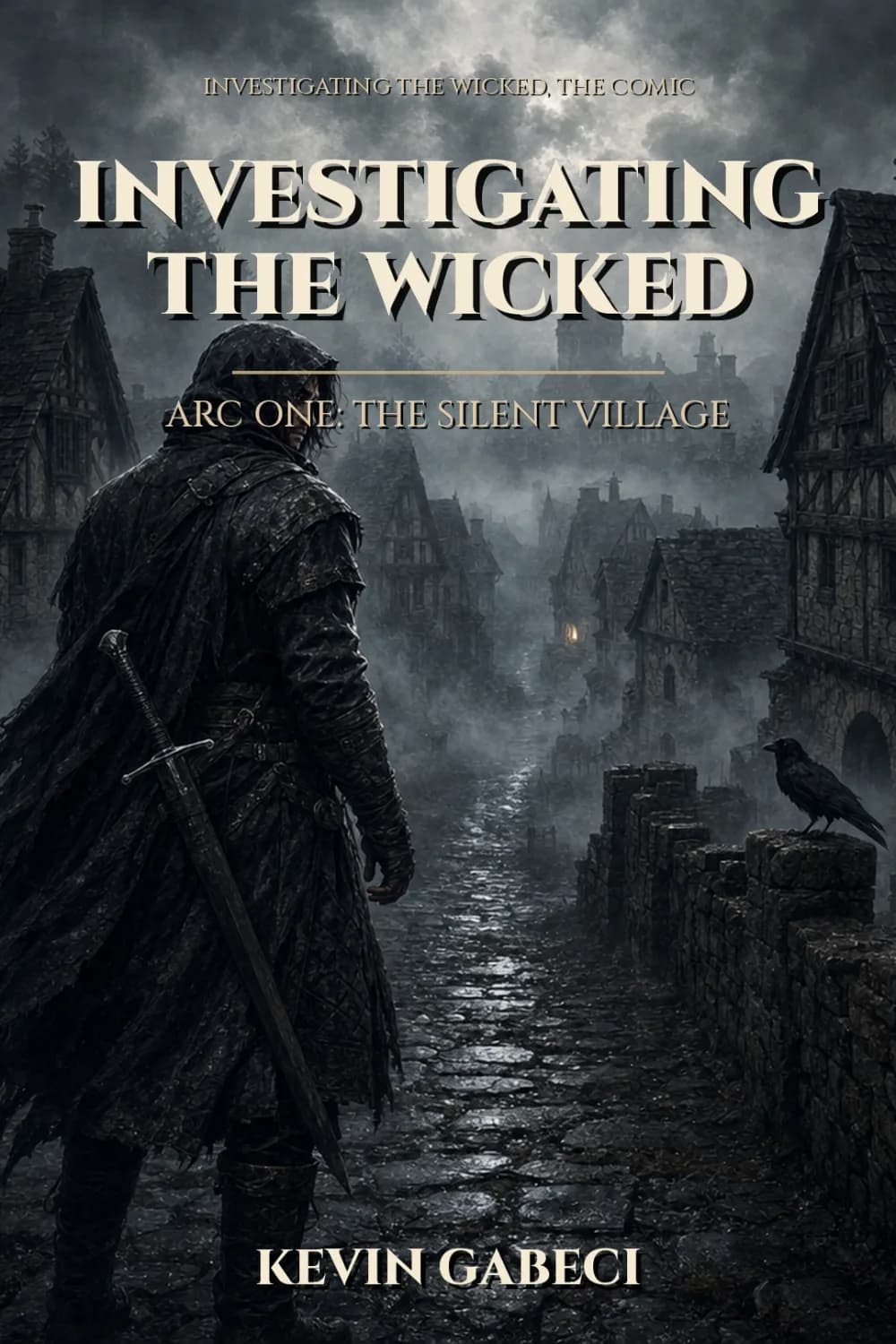
The comic is a full color graphic novel retelling of the first arc, the opening case that starts the whole series. Same character, same world, told in panels instead of paragraphs. It is not a side story or a spinoff. It is the beginning, drawn.
What it gives you is speed and atmosphere. In one sitting you see the look of the world of Strohr, the weight Kavel carries as a lone hunter, the kind of horror the series traffics in, and the tone of the thing. A novel asks for hours before it tells you whether you will like it. A comic shows you in minutes. The fog over a silent village, the muted greys of empty streets, the single splash of red when the horror finally surfaces, you feel those choices on the page before you could put them into words.
The trade is depth. A comic moves fast by design, so the interior life, the slow build of dread, the texture of Kavel's thinking, these get compressed. You get the shape of the story and the feel of the world. You do not get the full weight.
The novels are where the series actually goes deep. The episodic cases, the slow unraveling of Kavel's black and white worldview, the patient conspiracy running under everything, all of it has room to breathe across multiple books. This is the complete experience.
What the novels give you that the comic cannot is interiority and accumulation. You live inside Kavel's certainty and feel it crack a little with each case. You sit with the dread instead of glimpsing it. The larger mystery doles itself out one clue at a time across hundreds of pages, which is the kind of slow burn that only prose can really pull off. The payoffs land because you walked every step to get there.
The trade is commitment. The novels ask for your time before they pay you back. That is the deal with any book, and it is the deal here. If you give them the hours, they give you the whole world.
Pick the comic first if any of these sound like you. You are on the fence about whether dark fantasy mystery is your thing and you want a low risk taste. You are a visual reader who loves graphic novels. You want to see the world before you read it. You have a friend who does not read much but might be pulled in by panels and color.
It costs you a single sitting and tells you, clearly, whether you want to walk further in. A lot of readers use it exactly this way, as a taste test, and then go straight to the novels with confidence.
Read the comic, Arc One, on Amazon
Pick the novels first if any of these sound like you. You already know you love dark fantasy and detective fiction and you do not need convincing. You prefer depth over speed and you are happy to invest in a world. You read fast and want the full story, not a preview. You like a slow burn conspiracy that rewards patience.
If that is you, skip the taste test and sit down at the real table. The novels are the main event, and Book One is the front door to all of it, the world, the order, Kavel himself, and the mystery that drives everything forward.
Read Investigating the Wicked Book One on Amazon
Yes, and plenty of readers do, most often comic first then novels, because the comic only covers the opening case in color and the novels expand that very ground and carry you far past it, with no spoilers and no wasted overlap.
If you want the bigger picture before you choose, including the full reading order and a short look at each book, there is a spoiler free starting guide at where to begin with Investigating the Wicked. It lays out the whole series at a glance so you can pick your entry point with eyes open.
You can also browse everything in one place, the comic and every novel, every format, at books.kevingabeci.com.
The comic and the novels are all on Kindle and free in Kindle Unlimited, so a subscriber can try either one tonight for nothing but the time. Whichever you choose, the only wrong move is standing on the threshold. Open the comic in a single sitting, or sit down with Book One and stay a while, and let Strohr do the rest. If it grabs you, a short review and a word to one person who would love it is the best gift a reader can hand an independent author.