September 1, 2026Series Primer
How Investigating the Wicked Is Built: Standalone Cases That Feed One Larger Mystery
A reader facing look at how Investigating the Wicked is structured, episodic cases that read standalone but feed one larger mystery, and why that structure makes it bingeable.Investigating the Wicked
Dark Fantasy
Series Structure
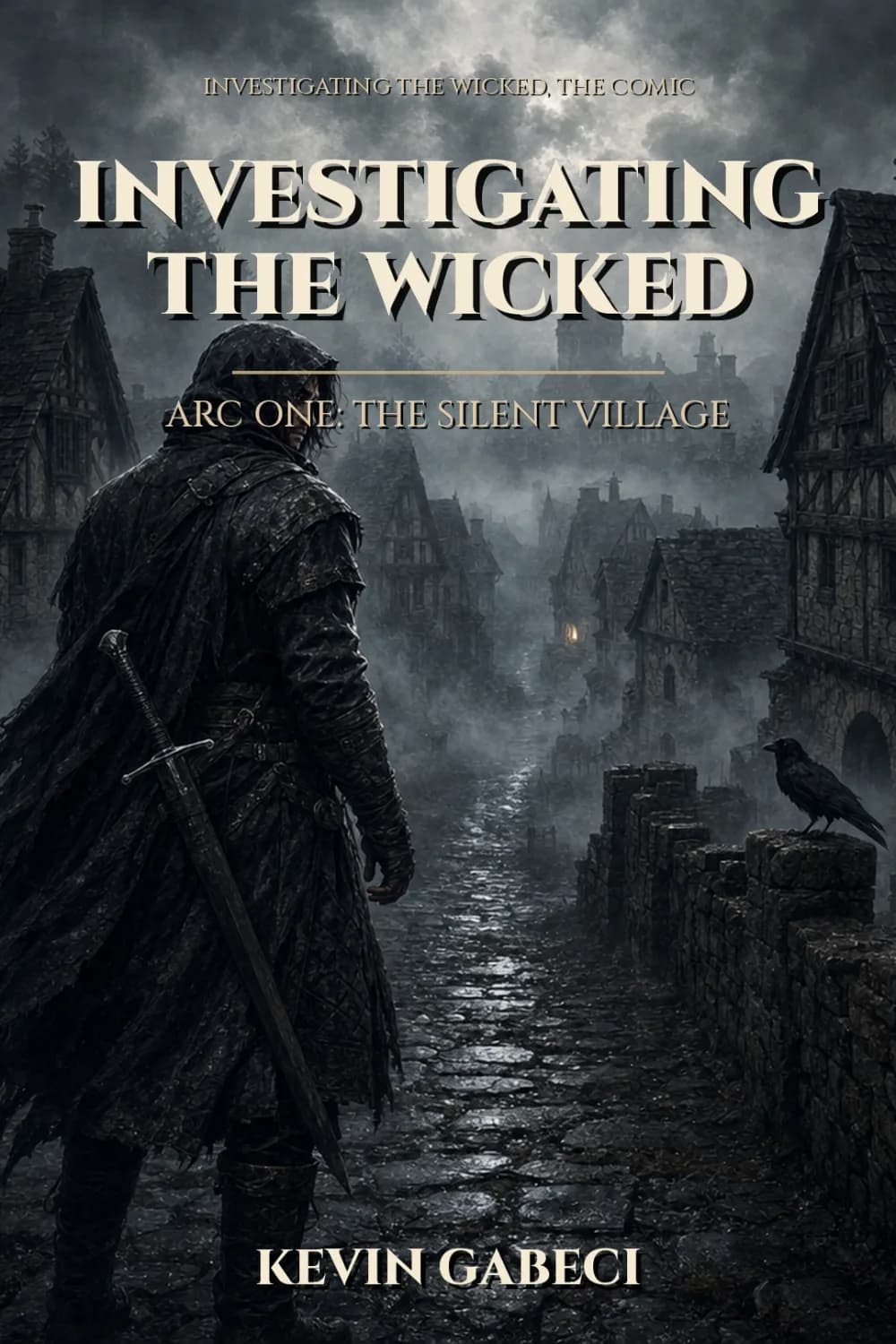
At the ground level, the series runs on episodic cases. The shape is consistent and satisfying. The hero arrives somewhere with something quietly wrong about it, he reads the place and its people, he digs until the wrongness has a face and a name, and he ends it before he rides on. Each case is its own dark, eerie story with a beginning, a turn, and a close, a contained hunt you could hand to someone who has read nothing else in the series and watch them get pulled in.
This matters because it makes the series approachable. You are never lost in a thousand page tangle waiting for a payoff. Each case gives you a contained mystery you can sink into and solve alongside the hero, with the satisfaction of a real ending before the next one begins. It reads fast, it reads clean, and it gives a busy reader natural places to stop and start without losing the thread.
Here is the part that turns a collection of cases into a series. None of those self contained stories is truly separate. Underneath the monster of the moment, something patient is moving, and the deeper the hero goes, the more the cases start to rhyme. A detail in one town echoes a detail far away. A pattern begins to surface that no single case could reveal on its own.
That hidden thread is the engine. What looks like a string of standalone hunts is slowly assembling into one long mystery, a conspiracy that has been working in the shadows for a very long time. The standalone cases are how the larger truth gets delivered, one careful piece at a time, so that you are solving a small mystery in the foreground while a much bigger one quietly builds in the back of your mind. By the time you notice the shape of it, you are already in too deep to stop.
The best comparison is the kind of show that runs a fresh case each episode while a season long arc tightens underneath. You can drop into any episode and enjoy it, but the people who watch in order get something extra, the slow reveal that the cases were connected all along. Investigating the Wicked works exactly like that, except the season long arc spans the whole series, and the reveals are paid off across books rather than across a handful of episodes.
This gives the series two pleasures at once. There is the immediate pleasure of each case, the contained hunt with its own answer. And there is the deeper pleasure of the long game, the growing sense that everything you have read is connected, that the author has been laying track honestly since the first page. The two work together. The standalone cases keep the pages turning, and the larger mystery keeps you coming back for the next book.
The structure is built for momentum. Each case ends, which means each case gives you a small hit of closure and a clean stopping point. But each case also adds a piece to the larger puzzle, which means the stopping point is never quite satisfying enough to actually stop at. You finish one investigation and immediately want to start the next, because you can feel the bigger thing getting closer.
That tension, satisfying endings that still pull you forward, is the exact recipe that makes a series hard to put down. There is always a complete story right behind you and an incomplete one stretching ahead. You binge not because the book ends on a cliff every time, but because the whole is always slightly more than the sum of the cases, and you want to see the shape of it resolve.
If you like stories that reward both casual reading and close attention, that give you a fresh dark mystery every arc while quietly building one enormous one underneath, this is a series built for the way you read. The structure starts at the very beginning, with the first case in the first book.
Read Investigating the Wicked: Book One on Amazon
If you want the full reading order and a short look at each book before you commit, there is a spoiler free starting guide at where to start with Investigating the Wicked. You can also browse the whole library, every book and format, at books.kevingabeci.com.
Every book in the series is on Kindle and free to read with Kindle Unlimited, so a subscriber can start the first case tonight. Tell yourself you will read one case and stop. You will not, and that is the whole design talking, the clean ending that closes a story and the loose thread underneath it that will not let you put the book down. When the structure does its job on you, a short review from a reader who got caught is the single most useful thing you can hand an independent author.